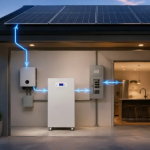
Need extra storage space at your villa on the Costa Blanca? Imagine having a dedicated garden room that keeps fresh fruit and vegetables cool, stores drinks for your poolside gatherings, or houses essential garden equipment while using solar energy to reduce electricity consumption.
For homeowners in Torrevieja, Orihuela Costa, Guardamar del Segura and across Costa Blanca South, solar-powered garden storage offers an opportunity to combine practical outdoor space with smarter energy use.
But not every garden building needs the same equipment. A refrigerated cold room has very different requirements from a beverage storage unit or a general-purpose garden utility room. And while some systems can operate independently of the electricity grid, others work best with a grid connection and battery backup.
In this guide, KwiCo Energy explores three practical solutions, explains the differences between off-grid and hybrid solar power, and outlines what to consider before installing a solar-powered garden room at your Spanish property.
Why Consider Solar-Powered Garden Storage on the Costa Blanca?
The Mediterranean climate offers abundant sunshine for solar energy generation. At the same time, summer temperatures can make it challenging to store temperature-sensitive products and use outdoor spaces comfortably.
A properly designed solar-powered garden storage system can help you:
Reduce grid electricity consumption by using solar energy to power suitable equipment.
Keep food and drinks cool with correctly specified refrigeration and insulation.
Improve energy resilience with battery storage and an appropriate backup system.
Make better use of garden space without extending the main house.
Create a more practical villa with dedicated storage for outdoor living, gardening and maintenance.
The best solution depends on what you intend to store, the required temperature, your available space and whether you want to remain connected to the electricity grid.
Let’s explore the three main options.
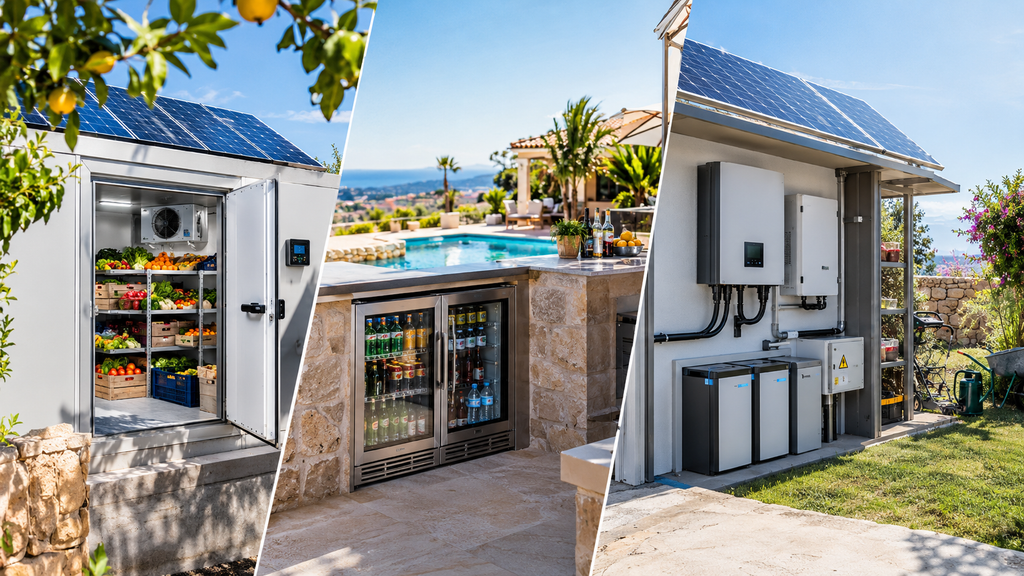
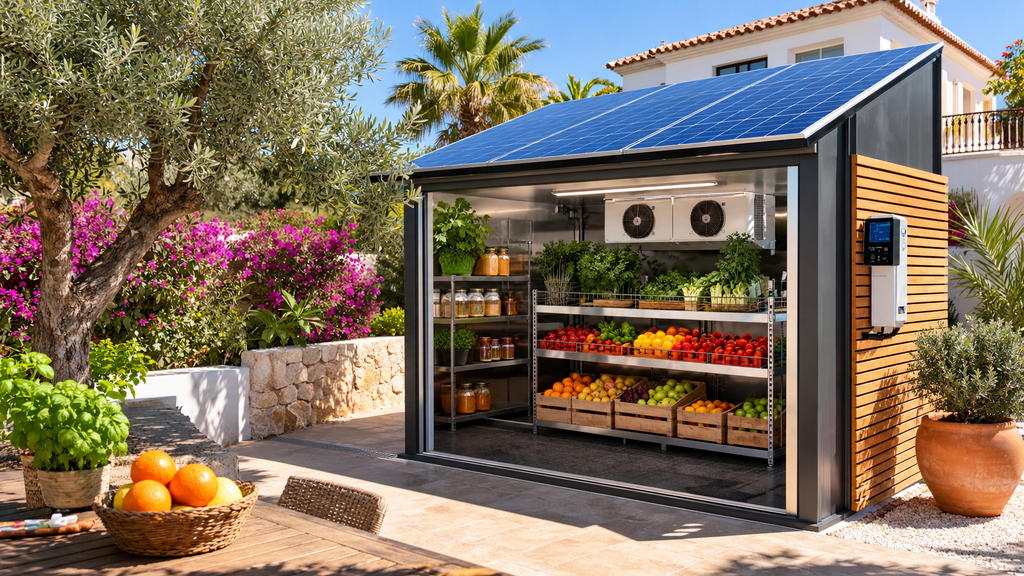
1. Solar-Powered Garden Cold Rooms for Fruit and Vegetables
Best for: fresh produce, homegrown vegetables, fruit, and temperature-sensitive food storage.
If you grow citrus fruits, tomatoes, peppers or other produce, or simply need additional refrigerated storage, a dedicated garden cold room could be worth considering.
Unlike a standard garden shed, a cold room is an insulated enclosure equipped with refrigeration designed to maintain a suitable internal temperature.
A solar-powered garden cold room can combine:
An insulated, weather-resistant structure.
A suitably sized refrigeration unit.
Solar photovoltaic panels.
An inverter and electrical protection.
Optional battery storage.
Temperature monitoring and alarms.
A grid connection or other suitable backup, where available.
Solar panels generate electricity during daylight hours. This electricity can power the refrigeration system directly through the appropriate electrical equipment, with surplus energy charging a battery if one is installed.
The insulated enclosure helps maintain the desired temperature and reduces the cooling load. The refrigeration equipment then operates as required to compensate for heat entering the room.
This is particularly important during the hot summer months on the Costa Blanca, when ambient temperatures can be high.
Should you choose a fully autonomous or hybrid cold room?
A hybrid system uses solar power alongside a grid connection. Battery storage can provide additional flexibility and backup, depending on the system design.
A fully off-grid cold room requires enough solar generation, battery capacity and backup capability to maintain the required temperature during periods of low sunshine and at night.
For many private villas, a hybrid solution is the more practical starting point because it reduces dependence on solar production alone.
Important: fruit and vegetables do not all require the same storage temperature or humidity. A suitable design should consider the types of produce, storage volume, expected door openings and the manufacturer’s refrigeration recommendations.
For a villa in Torrevieja or Orihuela Costa, the right design starts with the intended use rather than simply choosing the largest solar panel system.
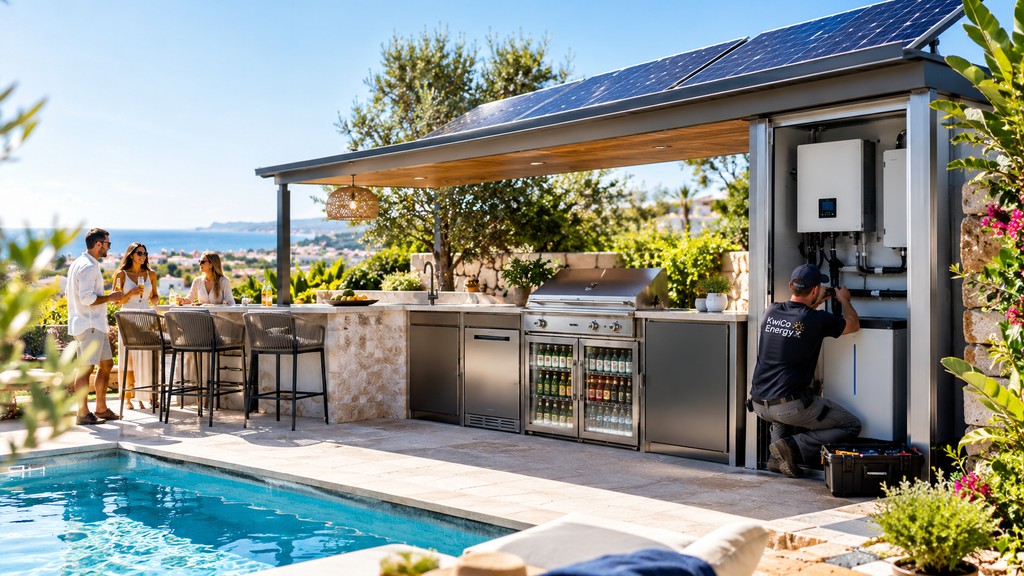
2. Solar-Powered Outdoor Beverage and Food Storage
Best for: poolside drinks, outdoor kitchens, barbecues and entertaining guests.
Do you regularly host friends and family at your villa? Perhaps you have a swimming pool, outdoor kitchen or large terrace and want convenient access to chilled drinks and food without constantly walking back into the house.
A dedicated outdoor cooling and storage unit can provide a practical alternative to a full walk-in cold room.
Depending on the space and budget, this could be:
A weather-protected outdoor refrigerator or beverage cooler.
A compact insulated storage enclosure with refrigeration.
A purpose-built garden pavilion incorporating a cooling unit.
A larger outdoor kitchen storage installation with dedicated electrical supply.
Solar panels can supply part or all of the electricity required, depending on the equipment, system capacity and operating conditions.
Why is this solution different?
A compact beverage refrigerator typically has a smaller cooling load than a walk-in cold room. It may therefore be easier and less expensive to integrate into an existing solar installation.
For properties with rooftop solar panels, it may be possible to power the outdoor cooling equipment from the existing system, subject to available capacity and electrical design.
Where no suitable solar system exists, a dedicated installation can be considered.
For holiday homes and rental villas around La Zenia, Cabo Roig, Villamartin and Campoamor, a well-designed outdoor storage area can also improve the functionality of the property for guests.
Is a battery necessary?
Not always.
If the refrigerator can remain connected to the electricity grid, the grid can supply electricity when solar production is insufficient. A battery may be useful if you want to increase self-consumption or maintain operation during certain outages.
For a genuinely off-grid installation, battery capacity must be calculated for night-time consumption and periods of poor weather.
The key is to choose a system based on actual energy demand rather than paying for unnecessary equipment.
3. Solar-Powered Garden Utility Rooms and Multi-Purpose Storage
Best for: garden equipment, technical systems, pool accessories and organised outdoor storage.
Not every homeowner needs refrigeration. Sometimes the real challenge is a lack of practical, organised space outside the house.
A solar-powered garden utility room combines a weather-resistant garden building with electrical equipment that can support selected functions such as lighting, ventilation, monitoring and small appliances.
Depending on the design, the room could be used for:
Garden tools and maintenance equipment.
Pool accessories and selected pool-control equipment.
Irrigation controllers and gardening supplies.
Electrical equipment and monitoring systems.
A dedicated technical area for solar and battery equipment, where appropriate.
A separate refrigerated compartment for temperature-sensitive products.
What makes it solar-powered?
Solar panels can supply electricity for lighting, ventilation and other compatible equipment. An inverter and battery can be added where the expected load and desired level of autonomy justify the investment.
However, a basic solar-powered utility room is not automatically suitable for food refrigeration or for housing every type of electrical equipment.
If you plan to store products that are sensitive to heat, the enclosure may require insulation and active cooling. Batteries and inverters also need appropriate ventilation, protection and installation conditions according to the manufacturer’s requirements.
A flexible option for Costa Blanca properties
This type of installation is particularly interesting for villas with larger gardens, swimming pools and separate outdoor service areas.
Instead of building a single-purpose structure, homeowners can plan a modular space that meets their current needs and potentially accommodates additional equipment later.
For properties in Guardamar del Segura, Ciudad Quesada, San Miguel de Salinas and the wider Alicante area, the appropriate configuration will depend on the available space, planning requirements and intended use.
Off-Grid vs Hybrid Solar: Which System Should You Choose?
One of the most important decisions is whether your garden storage installation should operate independently of the electricity grid or use a combination of solar energy, batteries and grid power.
Feature
Hybrid solar system
Fully off-grid system
Electricity supply
Solar and grid
Solar with independent backup as designed
Battery
Optional, often useful
Usually essential
Operation at night
Grid and/or battery
Battery or backup generator
Extended cloudy weather
Grid can supplement solar
Requires sufficient reserves and backup
Initial complexity
Often lower
Usually higher
Best suited to
Most grid-connected villas
Suitable properties needing genuine independence
What about semi-autonomous systems?
A semi-autonomous system can be a useful middle ground. For example, solar panels may power a cold room during sunny periods, while a grid connection supplies electricity when necessary.
A battery can reduce reliance on the grid and help cover periods without sunshine. The precise level of independence depends on system capacity and how the equipment is configured.
Be careful with the term off-grid. A conventional grid-connected solar installation does not necessarily provide electricity during a power cut. Backup operation requires compatible equipment and an appropriate electrical configuration.
For refrigerated storage, maintaining the required temperature is particularly important. Any system designed for independent operation should account for night-time demand, seasonal solar production, compressor start-up requirements and extended periods of cloudy weather.
How Much Does a Solar-Powered Garden Cold Room Cost?
There is no single price because the building, refrigeration system and solar installation can vary considerably.
The following figures are illustrative early-stage budgeting ranges, not verified supplier quotations. They should be confirmed with local installers before being used as customer-facing prices.
Solution
Indicative budget
Compact outdoor refrigerator using an existing solar installation
€500–€2,000
Small insulated cold room with refrigeration
€2,000–€6,000
Custom garden cold room with dedicated solar equipment
€4,000–€12,000+
Larger multi-purpose garden utility room with solar and battery storage
€4,000–€15,000+
The figures may exclude VAT, foundations, landscaping, permits, electrical upgrades, delivery and other site-specific work.
A fully autonomous refrigeration installation may cost substantially more than a grid-connected solution because it requires additional generation and energy storage capacity.
What determines the final price?
The main factors include:
Size and insulation: a larger enclosure or one with greater heat gain requires more cooling.
Refrigeration requirements: the required temperature, humidity and operating conditions affect equipment selection.
Solar panel capacity: the system must generate enough energy for the intended load.
Battery capacity: more storage may be needed for night-time operation and cloudy periods.
Backup arrangements: grid connection or a suitable alternative can affect the overall cost.
Installation work: foundations, access, electrical protection, weatherproofing and local site conditions all matter.
The most cost-effective approach is to calculate the expected energy demand first and then select equipment to match it.
Planning a Solar-Powered Garden Room on the Costa Blanca
Before purchasing a prefabricated shed or ordering solar panels, consider these five steps.
1. Define the purpose. Decide whether you need a refrigerated cold room, a beverage storage area or a general-purpose utility room.
2. Calculate the load. Identify the refrigeration equipment and other appliances, their expected electricity consumption and their operating hours.
3. Choose the power arrangement. Decide whether grid-connected solar, hybrid solar with batteries or a genuinely off-grid system best meets your needs.
4. Check the installation site. Consider sunlight, shading, access, drainage, ventilation, outdoor temperatures and proximity to an appropriate electrical supply.
5. Check local requirements. Depending on the structure and installation, municipal planning rules, building requirements, electrical regulations and other permissions may apply. Confirm these before construction.
For homeowners in Torrevieja, Orihuela Costa, Pilar de la Horadada, Santa Pola, Elche and neighbouring areas, local site conditions and municipal requirements should be checked for each project.
Frequently Asked Questions
Can a garden cold room run entirely on solar power?
Yes, a properly designed cold room can operate off-grid, but the system must be sized for the refrigeration load, night-time consumption and periods of reduced solar production. Adequate battery storage and a suitable backup strategy are particularly important if food must remain within a specified temperature range.
Can I power an outdoor refrigerator using my existing solar panels?
Potentially, yes. An installer should check the existing inverter, available solar capacity, electricity consumption, electrical protection and whether the equipment needs to operate during a power cut.
Is a solar-powered cold room suitable for the Costa Blanca climate?
It can be, provided the enclosure and refrigeration equipment are designed for the expected outdoor temperatures and operating conditions. Good insulation, appropriate ventilation and correctly sized refrigeration are essential.
Do I need batteries for solar-powered refrigeration?
Not necessarily if the system remains connected to the grid. Batteries become more important when you want to store daytime solar energy for use at night or maintain operation independently of the grid.
Can I install a garden cold room at a private villa in Spain?
The feasibility depends on the property, the type and size of the structure, municipal requirements and the installation itself. Check the applicable requirements with the local municipality and qualified installers before proceeding.
What is the difference between a garden shed and a cold room?
A garden shed is generally intended for storage and does not necessarily provide controlled temperatures. A cold room is an insulated enclosure equipped with refrigeration designed to maintain a specified temperature under defined operating conditions.
Can KwiCo Energy help plan a solar-powered garden storage project?
KwiCo Energy can be your starting point for exploring a suitable solution for your property on the Costa Blanca. The next step is to define the intended use, the available space, the electricity supply and the desired level of energy independence.
Explore Your Solar-Powered Garden Storage Options with KwiCo Energy
Whether you need a garden cold room for fresh produce, a dedicated outdoor beverage storage area or a multi-purpose utility room, the right solution starts with understanding your requirements.
KwiCo Energy focuses on practical energy solutions for residential properties across Costa Blanca South, including Torrevieja, Orihuela Costa and the surrounding Alicante region.
Tell us what you want to store, where the garden room will be located and whether your property already has solar panels. This information helps establish which type of installation may be appropriate and what needs to be assessed before obtaining a detailed quotation.
Planning a solar-powered garden project?
Contact KwiCo Energy to discuss your requirements and explore the options for your Costa Blanca villa.